
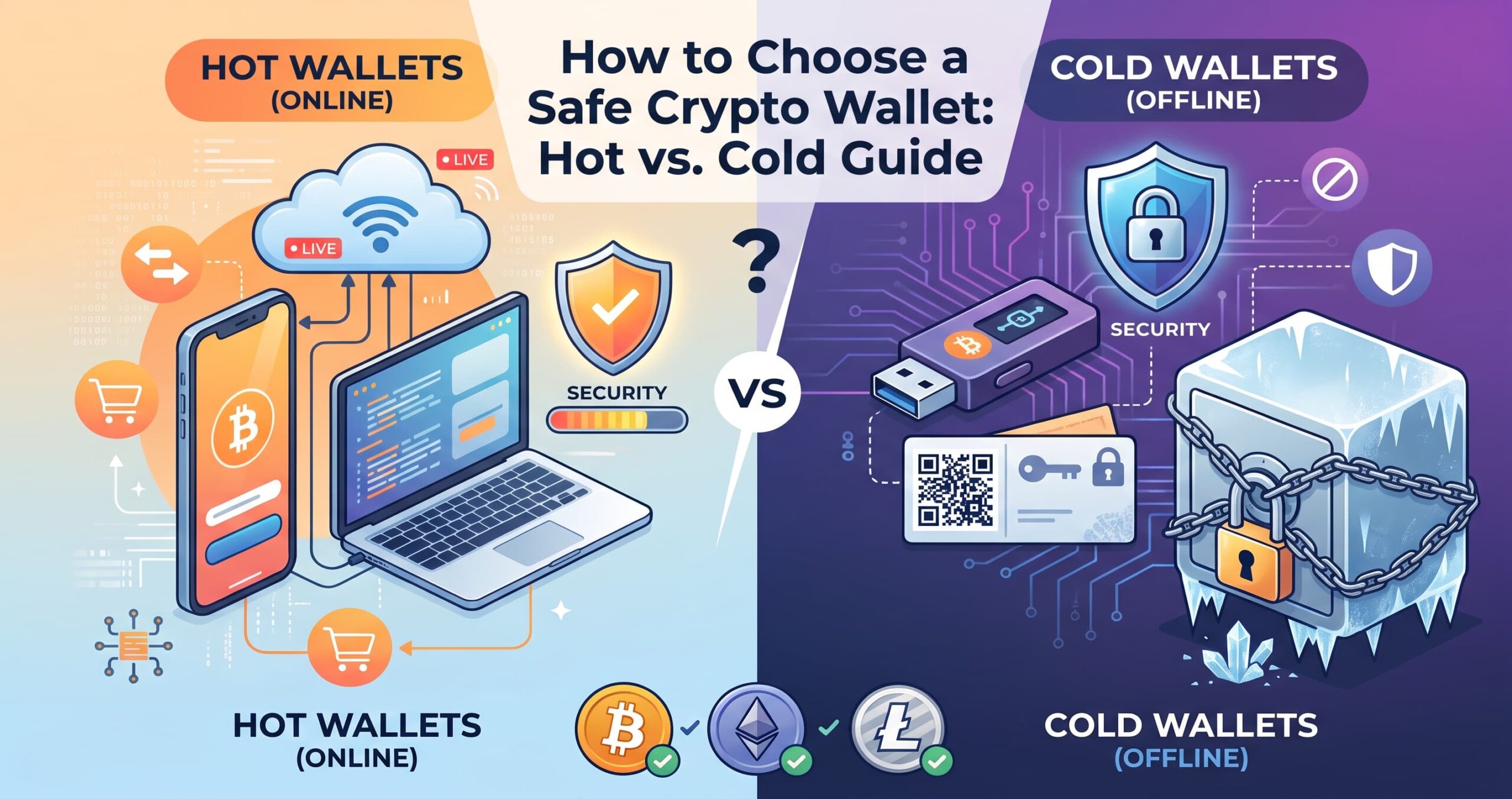

Hackers walked away with an astonishing $3.4 billion in cryptocurrency in 2025 alone. While massive centralized exchange breaches often dominate the financial headlines, a terrifying trend has quietly emerged right beneath the surface: individual wallet compromises surged to 158,000 incidents in a single year. When I analyze these theft statistics from blockchain analytics leaders like Chainalysis, one glaring truth consistently stands out. People still struggle to secure their private keys.
If you own digital assets, you face a critical decision regarding secure crypto storage. You cannot rely on a centralized exchange to protect your wealth forever. True digital ownership requires self-custody, which forces you to ask a pivotal question: should I use a hot or cold wallet?
In this guide, I will break down the exact difference between hot and cold crypto wallets. I will show you how to choose a safe crypto wallet based on your actual trading habits, highlight the best crypto wallet options for 2026, and teach you how to lock down your wealth so you never become a statistic.
What Actually Is a Cryptocurrency Wallet?
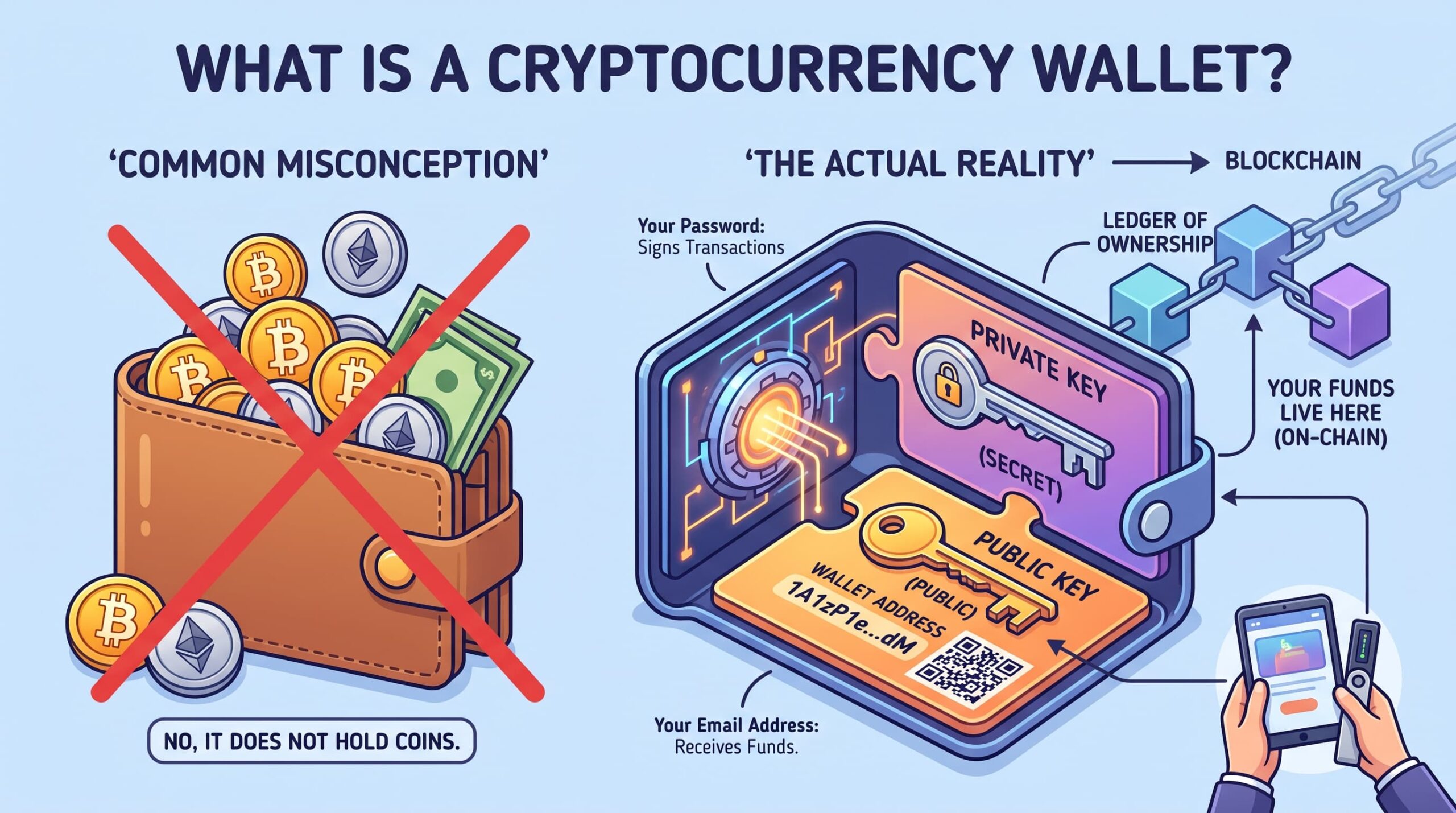
Before we compare hot wallets vs. hardware wallets, we need to clear up a major misconception. A cryptocurrency wallet does not actually hold your digital coins. Your Bitcoin, Ethereum, and Solana live entirely on the decentralized public blockchain.
Instead, your wallet stores something far more valuable: your private keys. Think of a private key as the cryptographic digital signature that proves you own specific assets on the blockchain. If someone gets your private key, they get your money. It really is that simple.
When we talk about finding a safe crypto wallet, we’re really talking about the safest way to store and use your private keys. The entire debate around hot vs cold wallet security boils down to a single factor: how closely your private keys connect to the internet.
The Core Debate: Hot Wallet vs Cold Wallet
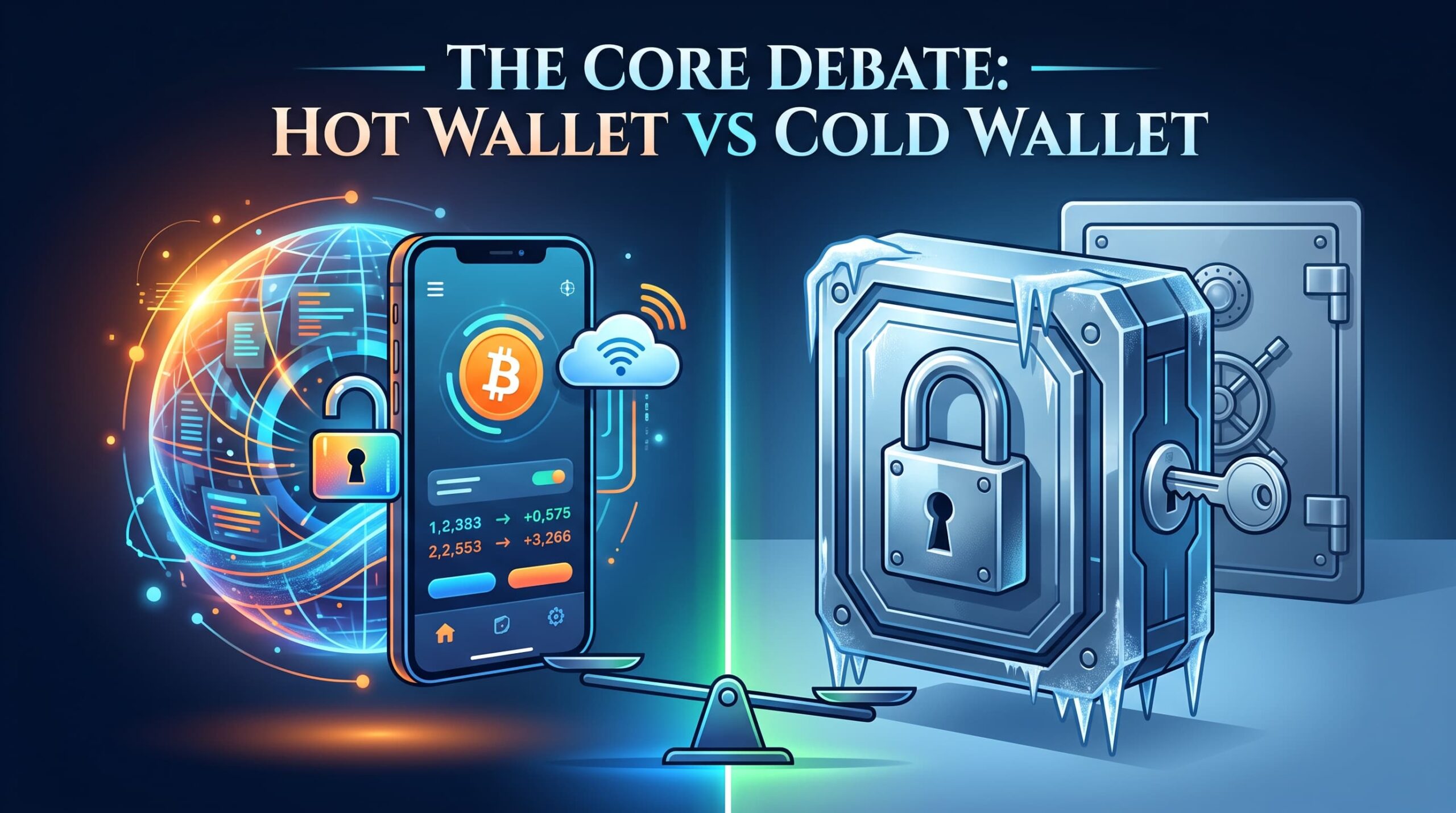
Understanding the two primary storage methods will dictate how you build your personal security architecture.
What is a Hot Wallet Crypto? (Online Storage)
A hot wallet is any software wallet crypto solution connected to the internet. When you download a Web3 wallet extension for your browser or install a mobile crypto wallet on your smartphone, you create a hot wallet.
These function as non-custodial hot wallets, meaning you retain complete control over your private keys. However, because the wallet software runs on a device connected to Wi-Fi or cellular networks, those keys technically touch an online environment whenever you sign a transaction.
The Pros of Hot Wallets: I use hot wallets every single day. If you want to interact with decentralized finance (DeFi) protocols, mint NFTs, or execute rapid trades on decentralized exchanges, hot wallets provide unmatched speed. They integrate seamlessly with decentralized applications (dApps), making them the most practical choice for daily active users.
The Cons of Hot Wallets: Convenience comes at a steep price. Because hot wallets stay online continuously, they remain highly vulnerable to remote cyberattacks. If you accidentally download a malicious browser extension, click a sophisticated phishing link, or blindly approve a compromised smart contract, hackers can drain your funds in seconds.
Safest Hot Wallet for Daily Trading: If you need a hot wallet for active use, stick to battle-tested options. MetaMask remains the undisputed industry standard for EVM-compatible chains, while Phantom dominates the Solana ecosystem. Trust Wallet also provides excellent multi-chain support for mobile users. To maximize crypto wallet security, only keep the funds you need for immediate trading inside these hot environments.
What is a Cold Wallet Crypto? (Offline Storage)
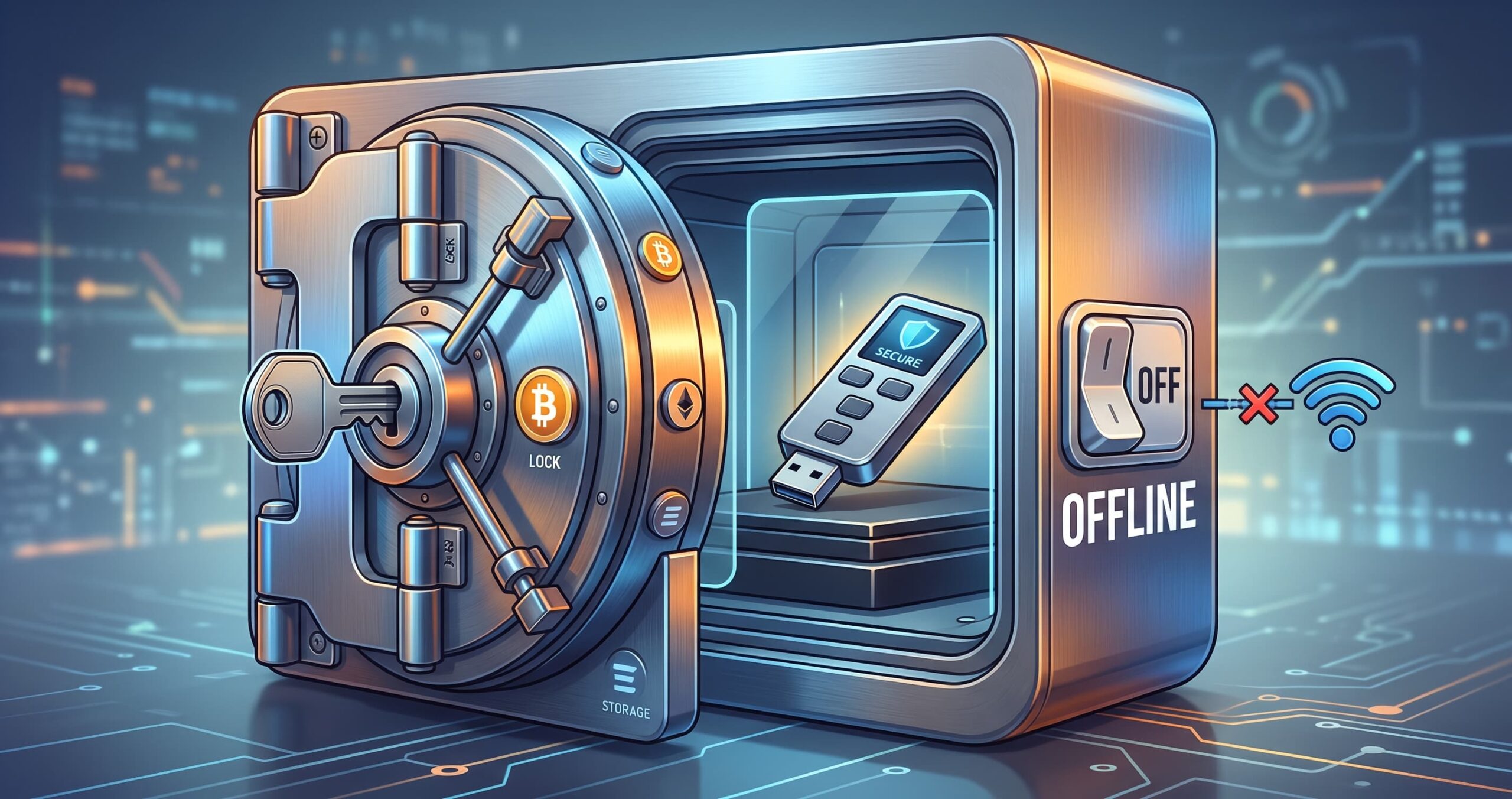
If a hot wallet acts like your digital checking account, a cold wallet crypto setup serves as your high-security vault. Cold wallets store your private keys completely offline, isolating them from all internet-borne threats.
The most popular form of offline crypto storage is a hardware wallet. These small, physical devices—often resembling sleek USB drives—contain specialized secure elements designed to generate and hold private keys in total isolation.
How Hardware and Air-Gapped Crypto Wallets Work: When you use a hardware wallet to send funds, you initiate the transaction on your internet-connected computer. Your computer sends the unsigned transaction to the hardware wallet. You physically press a button on the device to approve and sign the transaction, and the device sends only the cryptographic signature back to the computer. Your private keys never leave the hardware wallet, and they never touch your computer’s potentially infected memory.
For even higher security, some paranoid users prefer an air-gapped crypto wallet. These specialized devices never connect to your computer via USB cables or Bluetooth connections. Instead, they use integrated cameras and QR codes to pass transaction data back and forth, ensuring absolute physical isolation from digital networks.
Another traditional form of cold storage is a paper wallet crypto setup, where you simply print your private keys or seed phrase on a physical piece of paper. While paper wallets remain completely immune to digital hacking, they degrade over time, burn in fires, and easily get lost. Because of these physical vulnerabilities, modern hardware wallets easily beat paper wallets for practical security.
The Pros and Cons of Cold Wallets: Cold storage eliminates remote hacking risks entirely. A cybercriminal sitting in another country cannot drain your hardware wallet through a malware infection on your laptop. However, cold wallets sacrifice convenience. You must physically connect the device every time you want to move funds, which makes rapid, high-frequency trading practically impossible. Furthermore, hardware wallets cost money, whereas developers offer most hot wallets for free.
Can a Cold Wallet Be Hacked?: People often ask me, “Are cold wallets safer than hot wallets?” Digitally, yes, absolutely. But can a cold wallet be hacked? Yes, if a determined attacker gains physical access to the device and knows your PIN. More commonly, cold wallet users hack themselves by falling for social engineering scams. If you type your hardware wallet’s recovery phrase into a fake website, the attacker instantly gains access to your funds, bypassing the physical device entirely. Hardware wallets protect you from malware, but they cannot protect you from human error.
Difference Between Hot and Cold Crypto Wallets: A Clear Comparison
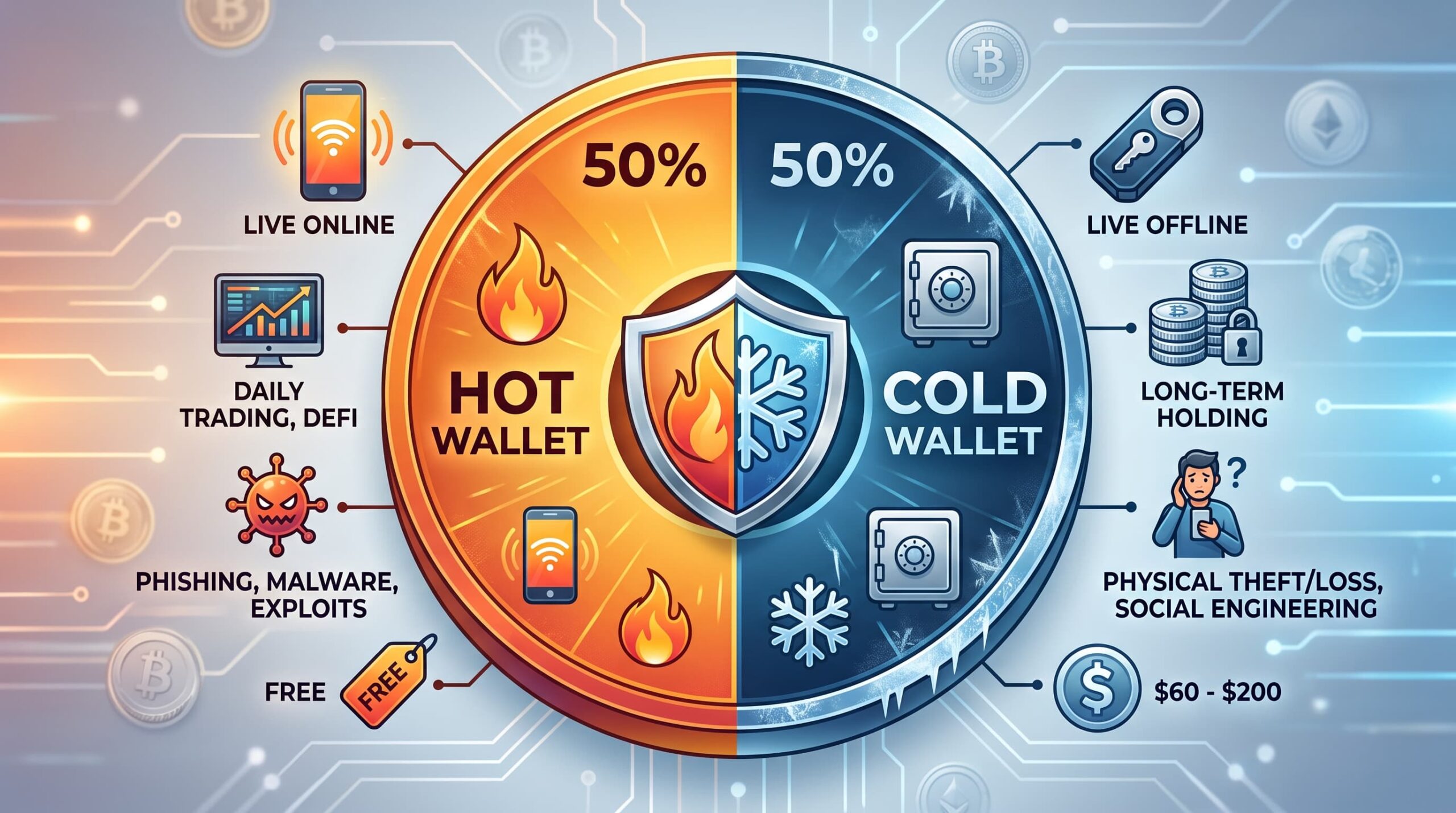
To fully grasp the hot wallet vs cold wallet dynamic, look at how they manage day-to-day operational risk:
-
Internet Connectivity: Hot wallets live online. Cold wallets live offline.
-
Best Use Case: Hot wallets excel at daily trading, DeFi interactions, and small everyday transactions. Cold wallets dominate long-term holding and secure crypto storage for large portfolio balances.
-
Vulnerabilities: Hot wallets face phishing, malware, smart contract exploits, and remote attacks. Cold wallets face physical theft, physical loss, and user-driven social engineering errors.
-
Cost: You can download hot wallets for free. High-quality hardware wallets typically cost between $60 and $200.
Should I Use a Hot or Cold Wallet? (The Expert Hybrid Strategy)
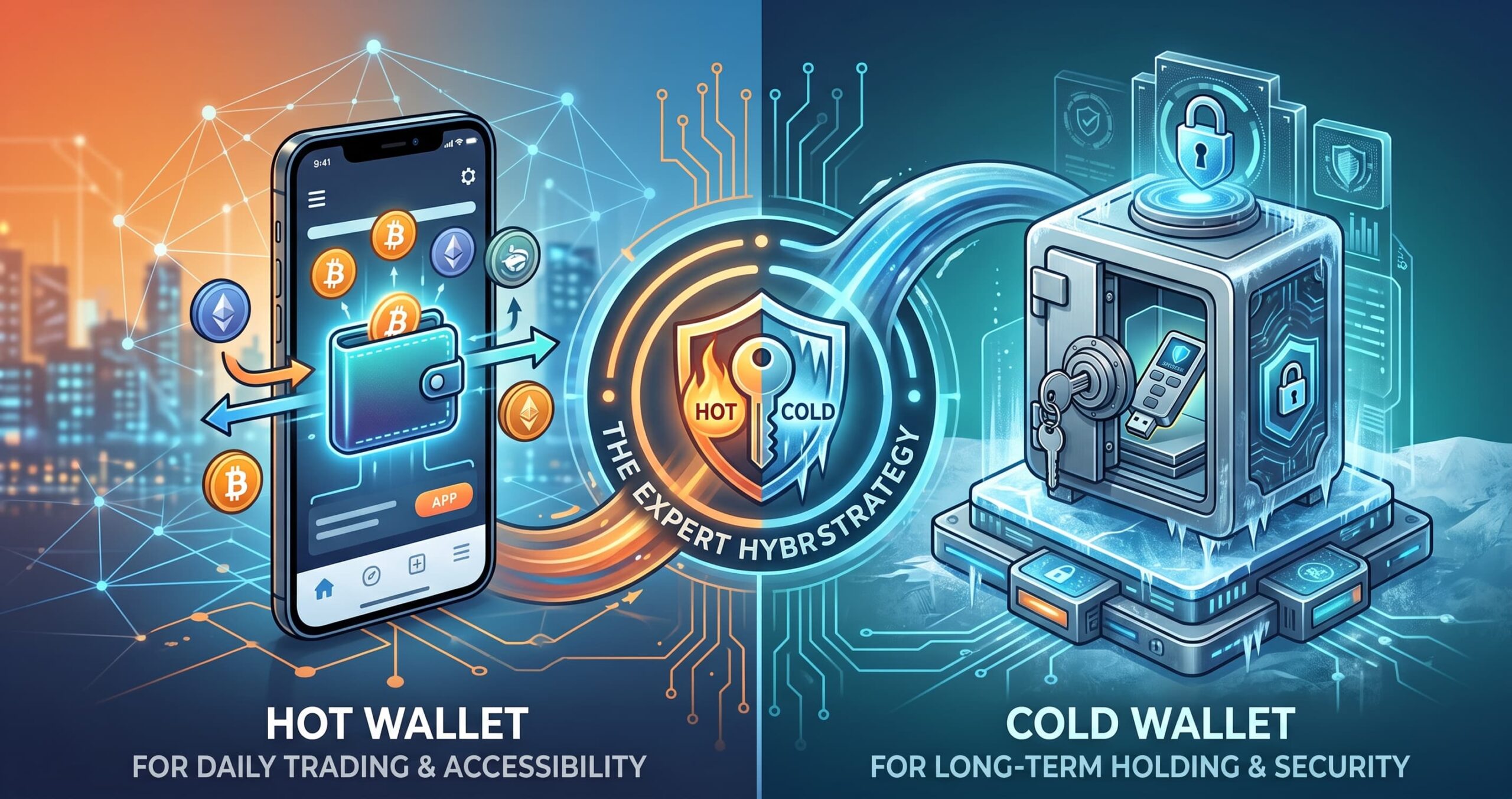
You do not have to choose just one. In fact, if you ask any security expert what is the safest way to store cryptocurrency is, they will immediately recommend a hybrid approach.
I advise my clients to treat their crypto storage exactly like traditional money. You do not walk around the city with your entire life savings stuffed into your leather wallet. You keep a small amount of spending cash in your pocket for daily use, and you leave the heavy capital locked safely inside a secure bank vault.
Store 80% to 90% of your long-term cryptocurrency investments in a hardware wallet. Keep the remaining 10% to 20% in a hot wallet to maintain liquidity, buy NFTs, or participate in active trading.
Best Hardware Wallet for Beginners: If you want to start utilizing cold storage today, you cannot go wrong with industry pioneers like Ledger or Trezor. The Trezor Safe 3 and the Ledger Nano S Plus offer incredible, military-grade security at a highly accessible price point. Both companies feature intuitive desktop interfaces that make the transition from hot to cold storage painless for beginners.
How to Transfer Crypto from Hot to Cold Wallet: Moving your assets safely requires a methodical approach. First, set up your hardware wallet and use its interface to generate your offline receiving address. Copy that exact alphanumeric address. Next, open your hot wallet, paste the hardware wallet’s address into the “Send” field, and initiate a micro-transaction (send $5 or $10). Wait for the network to process it. Once you confirm the test transaction arrived safely in your cold storage, send the remaining balance. Never skip the test transaction.
How to Secure Cryptocurrency: 4 Non-Negotiable Best Practices
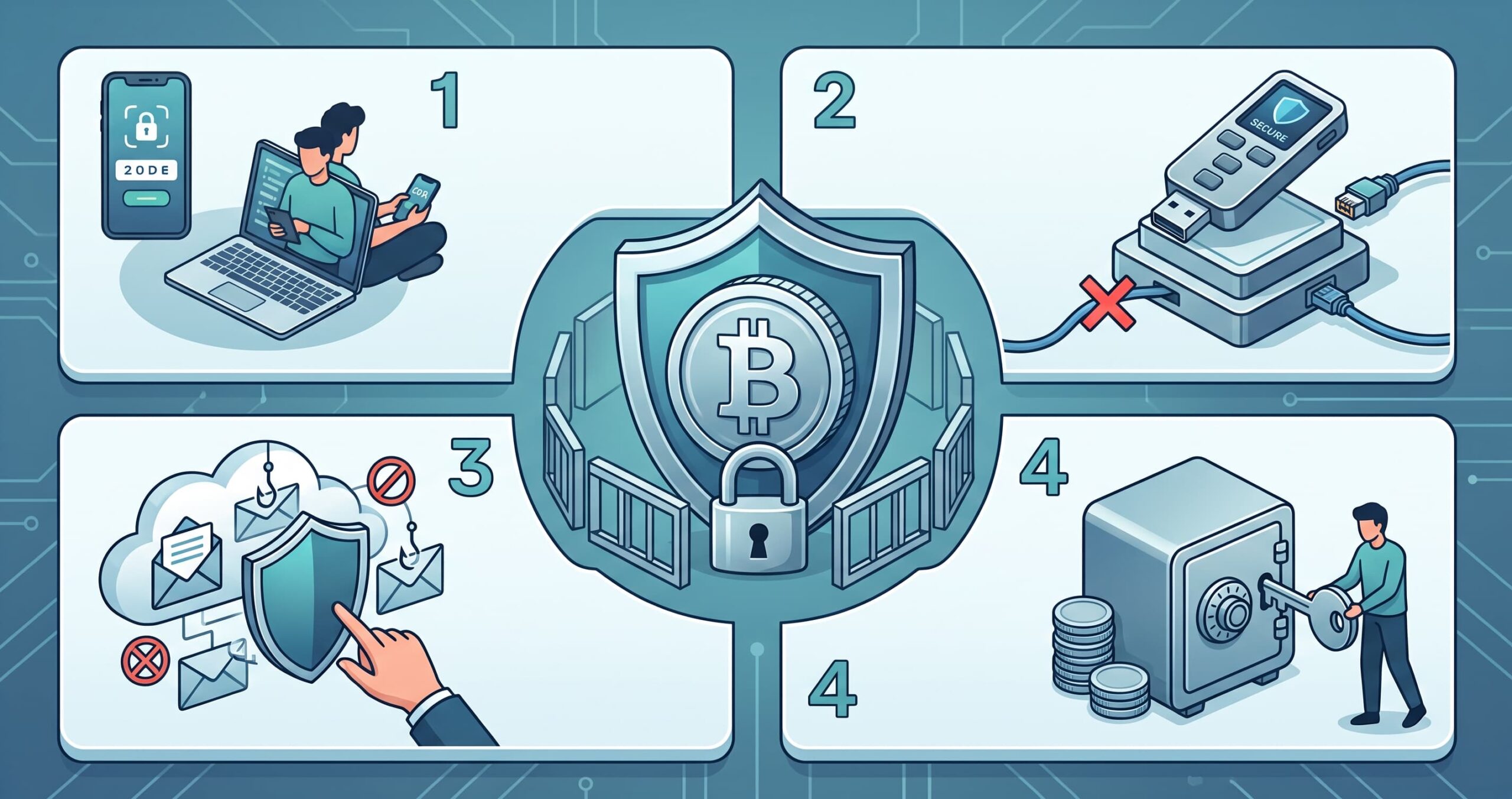
Regardless of which wallet type you choose, you must implement stringent crypto wallet security habits. The best technology in the world will not save you if you practice poor digital hygiene.
1. Seed Phrase Protection
When you create a non-custodial wallet (either hot or cold), the software generates a 12- or 24-word recovery phrase based on the BIP-39 standard. This seed phrase acts as the absolute master key to your entire wallet. If you lose your hardware device or accidentally delete your hot wallet app, you can type this phrase into a new device to recover your funds instantly.
Treat this phrase like physical gold. Never type your seed phrase into your phone’s notepad, never save it in a digital text file or cloud drive, and never take a screenshot of it. Hackers deploy specialized malware specifically designed to scrape phones and computers for 12-word phrases. Write your phrase down on physical paper or stamp it into a titanium backup plate, and lock it securely inside a fireproof safe.
2. Multi-Signature (Multi-sig) Wallets
If you hold significant wealth, consider upgrading to a multi-signature (multi-sig) wallet. A standard wallet requires only one signature to approve a transaction. A multi-sig wallet requires multiple signatures to execute a transfer.
For example, you could set up a 2-of-3 multi-sig wallet, meaning two out of three authorized keys must approve every transfer. You could hold one key on a hardware wallet in your office, keep one on your phone, and place the third backup key in a bank safety deposit box. This setup eliminates any single point of failure. If a thief steals your hardware wallet, they still cannot move the funds without accessing your phone as well.
3. Explore Multi-Party Computation (MPC) Technology
The security industry continues evolving beyond the traditional hot vs cold divide. Newer Multi-Party Computation (MPC) wallets split your private key into distinct encrypted shares distributed across multiple devices or servers.
Because the complete private key never exists in one single location, no single entity can authorize a transaction alone. Even if a hacker successfully compromises your phone, they only extract a useless, mathematical fragment of the key. This architecture offers a powerful, modern blend of hot wallet convenience and cold wallet security, and institutional custodians heavily favor it.
4. Two-Factor Authentication (2FA) Crypto Hygiene
While standard 2FA does not protect non-custodial seed phrases on the blockchain, it remains absolutely critical for securing any centralized exchange accounts (like Coinbase or Binance) you use to buy or sell your crypto.
Always secure these exchange accounts using a dedicated authenticator app (like Google Authenticator or a physical YubiKey). Never rely on SMS-based text message 2FA. Hackers routinely bypass text messages via SIM-swapping attacks, where they trick your telecom provider into transferring your phone number to their device, instantly granting them access to your one-time passwords.
The Final Verdict: Finding the Best Crypto Wallet in 2026
As we navigate 2026, the cryptocurrency ecosystem continues to prioritize secure self-custody crypto solutions. The staggering multi-billion-dollar losses reported by analytics firms prove beyond a shadow of a doubt that cutting corners on security carries extreme risk.
Choosing the best crypto wallet ultimately requires brutal honesty about your own habits. Evaluate exactly how often you trade, analyze the total fiat value of your portfolio, and honestly assess your personal technical comfort level.
Embrace the expert hybrid model. Buy a reputable hardware wallet to lock down your heavy, long-term holdings. Keep a clean, regularly updated hot wallet for your daily decentralized adventures. Above all else, guard your 12-word seed phrase with your life. By understanding the critical differences between hot and cold crypto storage, you transition from a vulnerable target into a hardened, confident participant in the digital economy.