

When I compare crypto vs traditional payments, I look beyond transaction speed. I also consider fees, security, convenience, refunds, and whether the payment method suits the person or business using it. For beginners, freelancers, and small business owners, choosing the wrong option can create unnecessary costs or make receiving money more complicated.
As a professional blogger since 2018 and the founder of several digital businesses, I focus on practical guidance that helps people make informed decisions. Through ShowrovBlog.com, I cover blogging, SEO, affiliate marketing, social media, AI tools, hosting, and online earning. I approach payment decisions with the same practical mindset: understand the benefits, recognize the risks, and choose based on real needs rather than hype.
In this guide, I’ll explain how cryptocurrency payments compare with traditional payment methods, where each option works best, and what to consider before using either one.
What Is the Difference Between Crypto and Traditional Payments?
The main difference is how each payment system transfers value and who manages the transaction.
How traditional payments work
Traditional payment methods include credit cards, debit cards, bank transfers, and services such as PayPal. Depending on the method, banks, card networks, payment processors, or digital payment providers authorize and process transactions.
These systems are familiar to most consumers and businesses. They may offer customer support, payment dispute procedures, transaction records, and established refund processes. However, availability, fees, processing times, and protection vary by provider and country.
For example, a freelancer might receive a client’s payment through a bank transfer or PayPal. A small online store might accept credit cards through a payment processor. Both approaches rely on a provider’s rules and supported services.
How cryptocurrency payments work
Cryptocurrency payments use digital assets such as Bitcoin or stablecoins. Many transactions rely on blockchain networks, which record and validate transfers without requiring a conventional bank to process every transaction.
Bitcoin is a decentralized cryptocurrency whose value can fluctuate significantly. Stablecoins, by contrast, aim to maintain a value linked to an asset such as the US dollar, although their prices and redemption arrangements can still carry risks.
With a crypto payment, the sender typically transfers funds to a recipient’s wallet address. Depending on the blockchain, the transaction may become difficult or impossible to reverse once confirmed.
The key distinction: Traditional payments generally operate through financial institutions or payment providers, while cryptocurrency payments can transfer digital assets through blockchain networks. Neither system is automatically cheaper, faster, or safer in every situation.
Crypto vs Traditional Payments: Fees and Transaction Speed
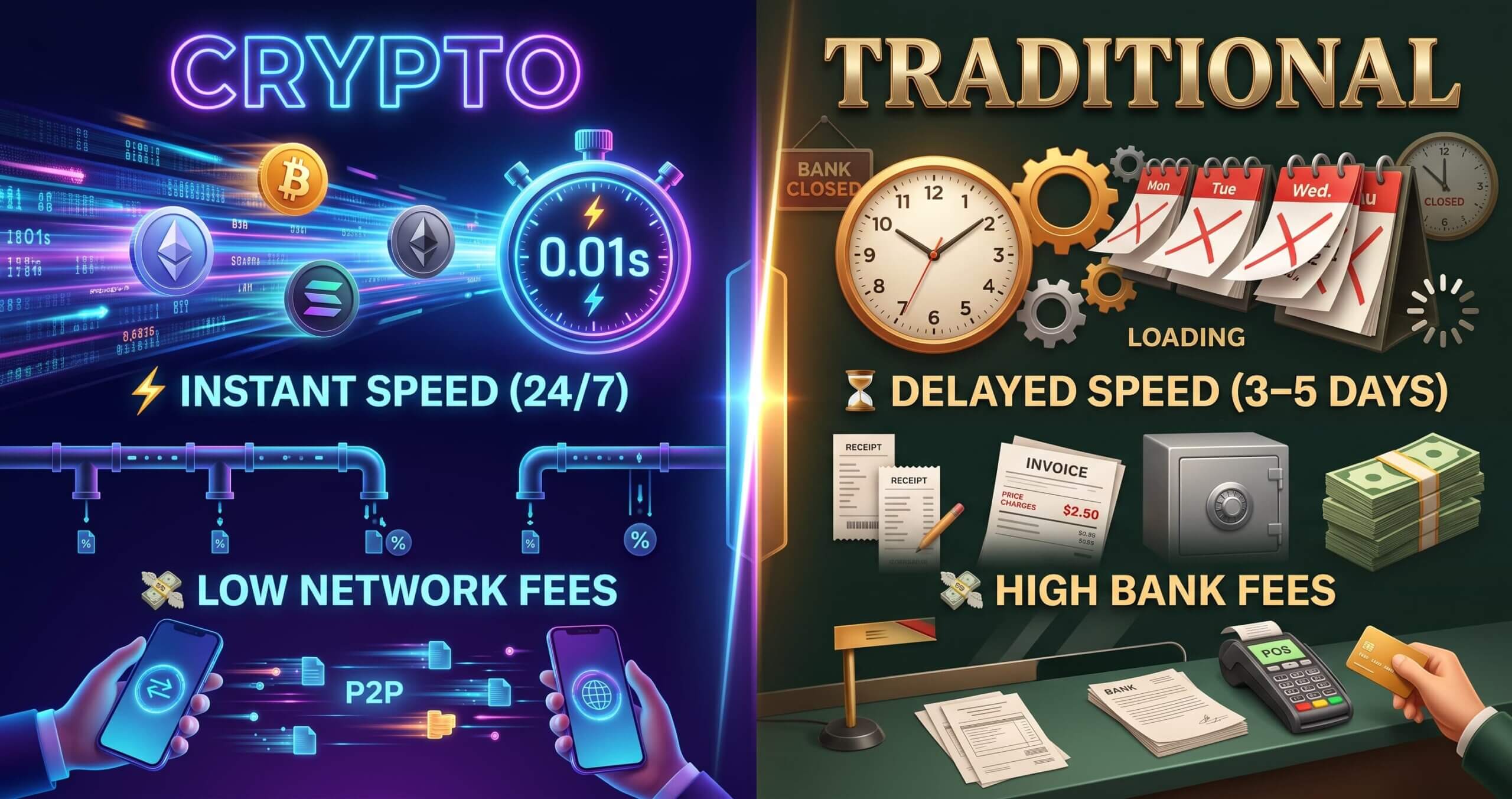
Fees and processing times often determine which payment method makes the most sense, particularly for freelancers, online businesses, and international customers.
Comparing payment fees
Traditional payment methods may involve card-processing fees, bank transfer charges, currency conversion costs, intermediary bank fees, or withdrawal charges. The exact amount depends on the provider, transaction type, country, and account terms.
Crypto payment fees work differently. A blockchain network may charge a transaction fee to process a transfer. Exchanges and payment gateways can also charge trading, conversion, withdrawal, or merchant-processing fees.
This means a cryptocurrency transfer is not necessarily free or cheaper than a bank transfer. During periods of network congestion, some blockchain transactions can become more expensive. A seemingly low network fee can also be outweighed by conversion costs or the spread charged when exchanging currencies.
Before comparing crypto payment fees, calculate the total cost of receiving and using the money, not just the fee displayed when sending it.
Comparing transaction speed
Bank transfers can arrive quickly, particularly when both parties use compatible instant-payment systems. Other transfers, especially international payments involving intermediary banks, may take longer.
Cryptocurrency transaction times depend on the blockchain, network conditions, confirmation requirements, and the recipient’s platform. Some transfers settle relatively quickly, while others take longer before an exchange or merchant makes the funds available.
| Factor | Crypto payments | Traditional payments |
| Transaction fees | Network, exchange, and service fees may apply | Bank, card, processor, and conversion fees may apply |
| Processing speed | Depends on the blockchain and required confirmations | Depends on the bank, card network, and payment method |
| Currency conversion | May require exchanging crypto or stablecoins | May involve bank or provider conversion rates |
| Availability | Depends on wallet access, network, and local rules | Depends on financial institutions and supported services |
| Payment reversals | Confirmed transfers are generally difficult to reverse | Some transactions may qualify for disputes or reversals |
For international payments, compare the final amount the recipient receives and how long it takes for the money to be usable. That gives you a more meaningful comparison than looking at advertised processing speeds alone.
Cryptocurrency Payments vs Credit Cards, Bank Transfers, and PayPal
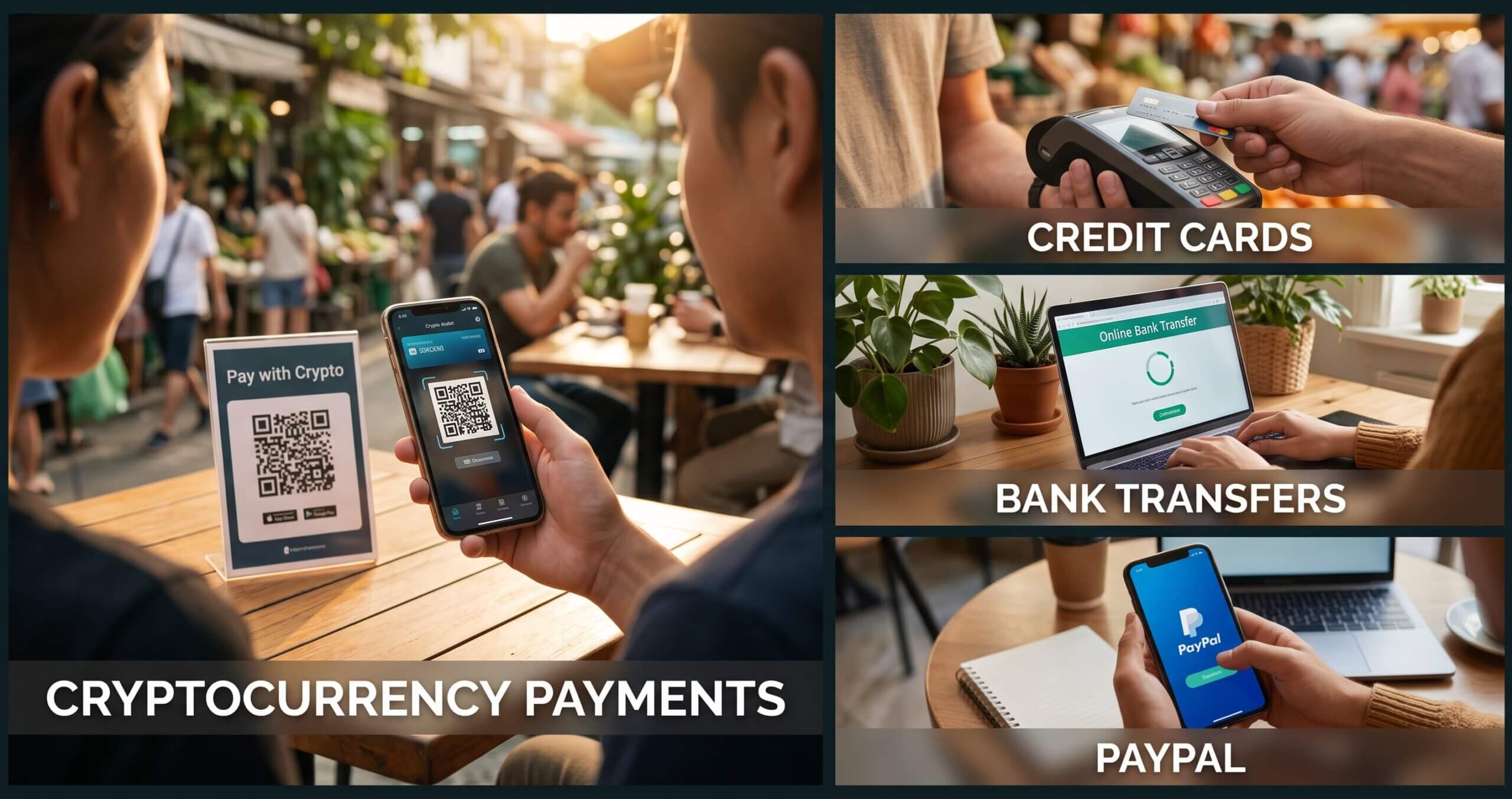
Different payment methods solve different problems. I would evaluate them according to the type of transaction, the people involved, and the consequences of a failed payment.
Cryptocurrency payments vs credit cards
Credit cards offer familiar checkout experiences and may provide dispute rights, fraud monitoring, and other protections under applicable rules and card agreements. Merchants can also benefit from established payment-processing infrastructure.
Crypto payments can give users more direct control over transfers, depending on how they store and manage their assets. However, sending funds to the wrong address or falling for a fraudulent payment request can result in permanent losses.
For online shoppers, credit cards may be more practical when purchase protection and the ability to dispute eligible transactions matter. Crypto may suit people who deliberately choose digital assets and understand how wallet transactions work.
Crypto vs bank transfer
Bank transfers are useful for paying invoices, moving money between accounts, and receiving salaries or business payments. They provide a familiar transaction record, although international transfers may involve delays, intermediary fees, or currency conversion costs.
Crypto transfers can provide another option for moving digital assets between supported wallets. However, recipients must know which blockchain and asset to accept, and both parties need to understand the associated risks.
For a freelancer receiving international payments, the right choice depends on the client’s available payment methods, local regulations, withdrawal options, and the total amount lost to fees and conversion.
Bitcoin vs PayPal
Bitcoin and PayPal are not direct equivalents. Bitcoin is a cryptocurrency, while PayPal is a payment service that supports transactions under its own account rules and available features.
PayPal may be convenient when customers and businesses already use its checkout and payment infrastructure. Bitcoin may appeal to users who want to transfer a cryptocurrency directly, but its market price can change between receipt and conversion.
If a business receives Bitcoin but pays its expenses in local currency, it must consider conversion costs and price fluctuations. If it receives PayPal payments, it should understand applicable transaction fees, withdrawal conditions, and dispute policies.
My practical takeaway: Choose a payment method according to what the recipient can reliably receive, withdraw, and spend—not simply what looks modern or inexpensive.
Are Crypto Payments Safe? Security, Refunds, and Regulation

Security is one of the most important parts of any digital payments comparison. Both crypto and traditional payment systems carry risks, but those risks differ.
Crypto payment security
Blockchain networks can provide transparent transaction records, but blockchain technology does not guarantee that every payment is legitimate or that every wallet is secure.
Common risks include phishing, fake payment addresses, compromised devices, fraudulent investment schemes, and mistakes when selecting a blockchain network. Losing access to a wallet’s recovery phrase can also make its funds inaccessible.
To reduce these risks, verify the recipient’s address and network, protect wallet credentials, use reputable services, and, when practical, test an unfamiliar transfer with a small amount. Never share a wallet’s private keys or recovery phrase with someone who claims they need them to release a payment.
Chargebacks and refunds
Credit card payments may qualify for chargebacks or other disputes under applicable rules. Bank transfers may have recall or recovery procedures in some circumstances, but successful recovery is not guaranteed.
Cryptocurrency transfers generally do not include a built-in chargeback mechanism. If a merchant agrees to refund a customer, the merchant usually needs to initiate a separate payment or use a service with its own refund process.
This difference matters for online stores. A business accepting crypto should publish clear refund terms, explain how refunds will be calculated, and specify whether it refunds the original crypto amount or an agreed fiat-currency value.
Crypto regulation and compliance
Cryptocurrency rules vary by jurisdiction and can affect whether people and businesses may use particular assets, exchanges, or payment services. Tax obligations, reporting requirements, and anti-money-laundering rules may also apply.
Before accepting cryptocurrency, check the rules in the countries where your business operates and where your customers are located. Review official government guidance and the terms of any exchange or payment processor you use.
For readers in Bangladesh, this local-law check is especially important. Do not assume that a service’s availability online means that using it for a particular cryptocurrency transaction is permitted under applicable Bangladeshi rules.
For general background, consult the Financial Action Task Force for international guidance on virtual assets and the Bangladesh Bank for official financial notices and local regulatory information. Verify the latest applicable rules before making a payment decision.
Pros and Cons of Crypto Payments: What I Would Consider

I would not treat cryptocurrency as a universal replacement for traditional payment methods. Each has advantages and disadvantages that become more or less important depending on the situation.
Potential advantages of crypto payments
- Direct digital transfers: Some cryptocurrencies can move between wallets without conventional bank payment processing.
- Cross-border payment options: Supported blockchain networks may allow transfers between countries without using the same banking route as a traditional international transfer.
- Flexible payment infrastructure: Businesses can explore crypto payment processors or wallet-based payment options when these suit their customers.
- Stablecoin functionality: Stablecoins can offer a digital payment option designed to track a reference currency, subject to issuer, reserve, redemption, and market risks.
Potential disadvantages of crypto payments
- Price volatility: Bitcoin and many other cryptocurrencies can change value quickly.
- Irreversible mistakes: Incorrect addresses and fraudulent transfers can lead to permanent losses.
- Additional complexity: Users must understand wallets, networks, confirmations, and conversion processes.
- Regulatory uncertainty: Rules and permitted services differ across jurisdictions and may change.
- Limited refund protection: Crypto transfers usually lack the standard chargeback process associated with eligible card transactions.
Traditional payments also have drawbacks, including provider fees, account restrictions, possible processing delays, and dependence on financial institutions. The better option depends on the problem you need to solve.
For an everyday purchase, I would prioritize convenience, clear pricing, and available consumer protections. For a business receiving international payments, I would compare settlement time, total costs, customer demand, legal requirements, and how easily the business can use the received funds.
Common Mistakes to Avoid When Choosing a Payment Method
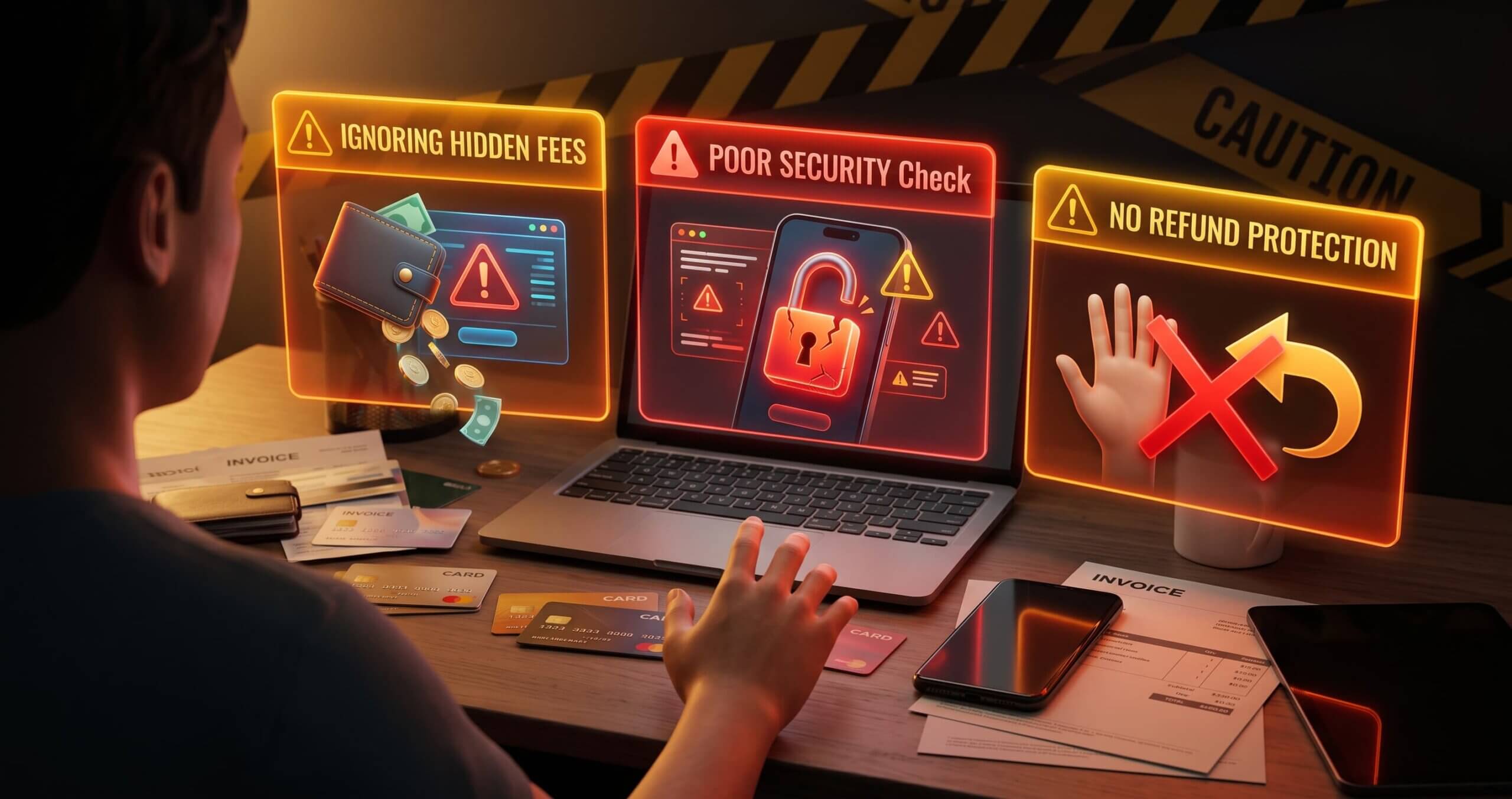
When evaluating payment systems for an online business, it is easy to focus on one attractive feature and overlook the complete transaction.
The following are practical lessons I apply when assessing digital tools and business processes. They are decision-making principles, not claims about specific payment experiments or financial results.
Mistake 1: Comparing only the advertised fee. A low transfer fee does not necessarily mean a low total cost. Include exchange spreads, withdrawal charges, intermediary fees, and the cost of converting funds into the currency you need.
Mistake 2: Assuming fast means fully settled. A transaction may appear quickly while a provider still requires confirmations, fraud checks, or additional processing before funds become available.
Mistake 3: Ignoring refunds and disputes. A payment method that works well for receiving money may be less suitable for a business that frequently handles returns, cancellations, or disputed purchases.
Mistake 4: Accepting crypto without a withdrawal plan. Before receiving digital assets, confirm how you will store them, convert them if necessary, account for fees, and use the proceeds legally.
Mistake 5: Treating stablecoins as risk-free cash. A stablecoin’s intended price stability does not eliminate issuer risk, redemption limitations, platform failures, or the possibility of losing its intended peg.
My general approach is to evaluate the entire payment journey: sending, receiving, converting, withdrawing, refunding, and recording the transaction. That is a more useful basis for comparison than choosing a method based on one headline benefit.
How to Choose the Right Payment Method: A Practical Checklist

Use these steps before choosing a payment method for personal use or your business.
- Identify your main need. Decide whether you need everyday checkout, domestic transfers, international payments, or a way to accept online orders.
- Calculate the total cost. Add payment fees, currency conversion, withdrawal charges, and any relevant intermediary costs.
- Check when funds become usable. Confirm actual settlement and withdrawal conditions instead of relying only on advertised transaction speed.
- Review security and refund options. Understand how you can recover from fraud, mistakes, disputes, or cancelled orders.
- Confirm legal and tax requirements. Check current rules in the relevant jurisdictions and keep appropriate transaction records.
- Test the process before relying on it. Where appropriate, begin with a small transaction and confirm that the recipient receives the correct amount through the intended method.
For a small business, I would also ask whether customers genuinely want to use the proposed payment method. Adding a payment option creates little value if customers find it confusing or the business cannot manage the associated risks.
Frequently Asked Questions

Are crypto payments cheaper than traditional payments?
Sometimes, but not always. Compare network fees, payment processor charges, exchange spreads, withdrawal fees, and currency conversion costs for the specific transaction.
Are cryptocurrency payments safer than credit cards?
Neither option is universally safer. Crypto users face risks such as irreversible transfers and wallet theft, while card users face fraud risks and must rely on applicable issuer and network protections.
Are stablecoin payments better for international transfers?
Stablecoins may provide a useful transfer option when both parties can legally access compatible services and convert or use the funds. Fees, redemption arrangements, network compatibility, and local regulations still matter.
Can a crypto payment be refunded?
A merchant can generally issue a separate refund if it agrees and has the funds available. However, a confirmed blockchain transaction usually cannot be reversed through a standard credit-card-style chargeback process.
Conclusion: Crypto vs Traditional Payments
When I evaluate crypto vs traditional payments, I focus on the actual needs of the person or business making the transaction. Traditional payment methods often suit everyday purchases, familiar checkout experiences, and transactions where established dispute processes matter. Cryptocurrency payments can offer an alternative for supported digital-asset transfers, but they add responsibilities around wallets, volatility, refunds, and regulation.
No single payment method works best for everyone. Compare the full cost, settlement time, security, customer experience, and legal requirements before deciding.
Your next step: Choose one real payment you expect to make or receive, compare at least two available methods using the checklist above, and select the option that best fits your needs and risk tolerance.